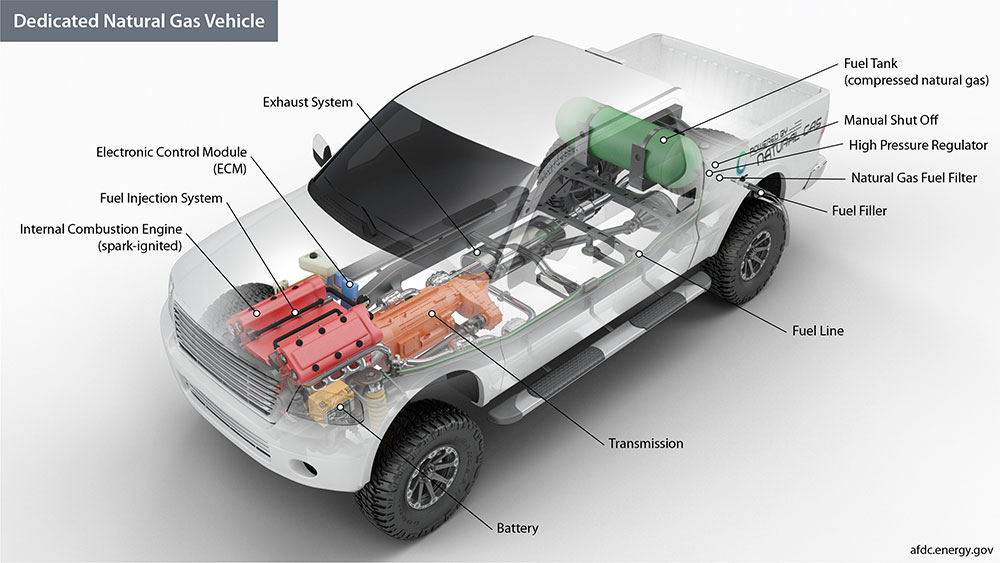
Compressed Natural Gas (CNG)
Compressed Natural Gas (CNG) is an environmentally friendly alternative to traditional fuels like gasoline and diesel. CNG is primarily composed of methane, a clean-burning fossil fuel that is abundant and can be sourced from natural gas fields or produced from renewable sources. The process of creating CNG involves compressing natural gas to less than 1% of its original volume, making it easier to store and transport.
Key Benefits of CNG:
- Environmental Impact: CNG produces fewer greenhouse gas emissions compared to gasoline and diesel. When burned, it emits significantly lower levels of carbon dioxide (CO2), nitrogen oxides (NOx), and particulate matter, contributing to improved air quality.
- Safety: CNG is non-toxic and does not pose a risk of groundwater contamination. In the event of a leak, CNG dissipates quickly into the atmosphere, reducing the risk of fire or explosion compared to liquid fuels.
- Cost-Effectiveness: CNG is often cheaper than gasoline and diesel, making it an attractive option for fleet operators and consumers looking to save on fuel costs.
- Energy Security: Utilizing domestically produced natural gas can reduce dependence on foreign oil and enhance energy security.
CNG is increasingly being adopted in both commercial and non-commercial vehicles, including buses, trucks, and passenger cars. Many cities and companies are investing in CNG infrastructure to support this transition, including fueling stations and vehicle conversion programs.
Technical Explanation of CNG
Common Symptoms of CNG Vehicle Issues:
- Reduced Power or Performance: If a vehicle running on CNG experiences a loss of power or acceleration, it may indicate issues with the fuel system or engine.
- Engine Misfires: Misfiring can occur if there is an imbalance in the air-fuel mixture or if the ignition system is not functioning properly.
- Check Engine Light: The illumination of the check engine light can signal various issues, including problems with the CNG fuel system or emissions control components.
- Difficulty Starting: If the vehicle has trouble starting, it may be due to low fuel pressure or issues with the fuel delivery system.
Diagnosing CNG Issues:
- Visual Inspection: Technicians will inspect the CNG fuel system for leaks, damaged components, or signs of wear.
- Diagnostic Scanning: Using an OBD-II scanner, technicians can retrieve error codes from the vehicle's computer to identify specific issues related to the CNG system.
- Fuel Pressure Testing: Measuring the fuel pressure in the CNG system can help determine if the fuel delivery is adequate for proper engine operation.
- Emission Testing: Analyzing exhaust emissions can provide insights into the combustion efficiency and help diagnose issues with the fuel mixture.
Common Repairs for CNG Vehicles:
- Fuel System Repairs: This may include replacing faulty fuel injectors, repairing leaks in the fuel lines, or replacing the CNG storage tank if it is damaged.
- Ignition System Repairs: Addressing issues with spark plugs, ignition coils, or wiring can resolve misfiring and performance problems.
- Engine Tune-Ups: Regular maintenance, including changing air filters and ensuring proper timing, can improve engine performance and efficiency.
- Emissions Control Repairs: Replacing or repairing components of the emissions control system, such as catalytic converters or oxygen sensors, may be necessary to meet regulatory standards and improve vehicle performance.
In summary, CNG is a promising alternative fuel that offers numerous environmental and economic benefits. Understanding its technical aspects, including common symptoms, diagnostic processes, and repairs, is essential for maintaining CNG vehicles and ensuring their efficient operation.