
What is a Knock Sensor, and what role does it play in engine performance?
Last Edited: Aug 27, 2023
Popularity: 1,494 views
Popularity: 1,494 views
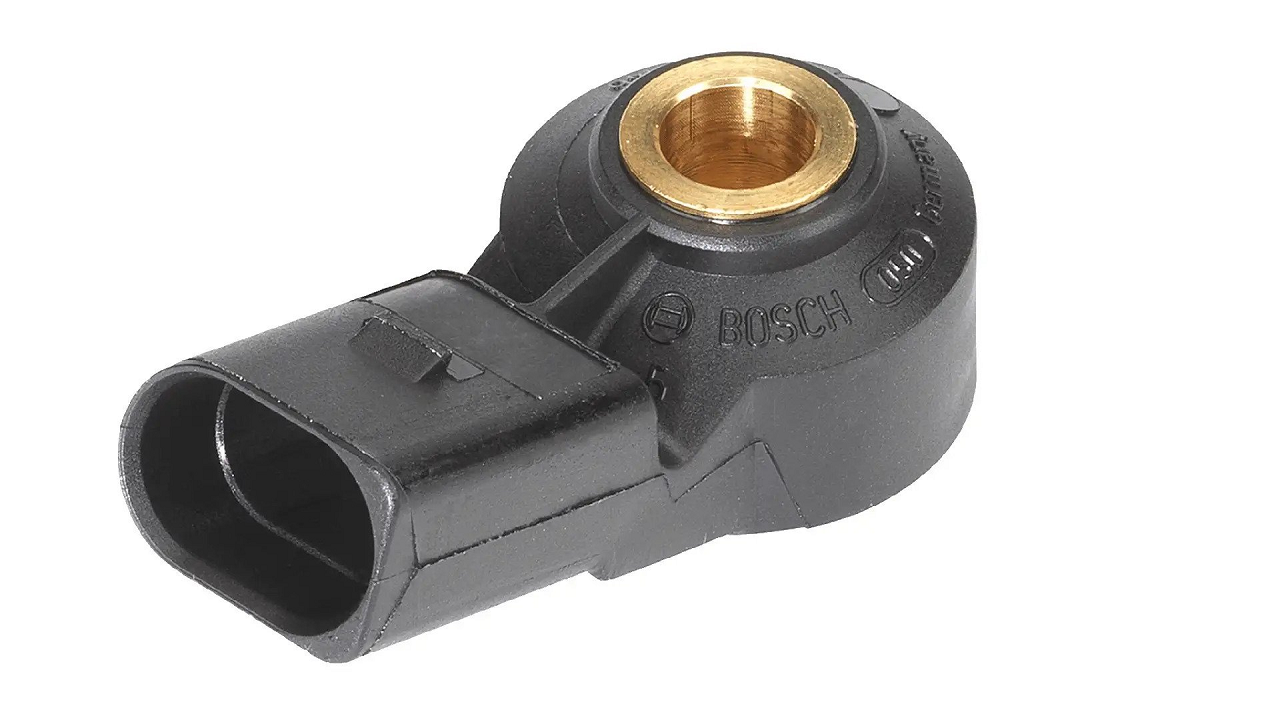
The "Knock Sensor" is a vital component in modern vehicle engines, particularly those equipped with electronic fuel injection and ignition systems. The primary function of the knock sensor is to detect engine knocking or detonation, a phenomenon that occurs when the air-fuel mixture ignites prematurely or unevenly in the engine's cylinders.
Engine knocking can be caused by various factors, such as incorrect ignition timing, lean air-fuel mixtures, or high compression ratios. When knocking is detected, it can lead to engine damage, decreased performance, and increased emissions. The knock sensor's role is to detect these knocking vibrations and send a signal to the engine control module (ECM), which adjusts the engine's timing and ignition to prevent knocking.
The ECM uses the knock sensor data to make real-time adjustments to the ignition timing and fuel injection. By retarding the ignition timing or enriching the air-fuel mixture, the ECM can eliminate or reduce knocking, preventing potential engine damage.
A malfunctioning knock sensor can lead to several engine performance issues, including:
Reduced engine performance: If the knock sensor fails to detect knocking, the ECM may not make the necessary timing adjustments, leading to reduced engine power and performance.
Increased emissions: Engine knocking can produce increased emissions of nitrogen oxides (NOx) and other pollutants. A faulty knock sensor may not effectively address this issue.
Poor fuel efficiency: Engine knocking can lead to inefficient fuel combustion, resulting in reduced fuel efficiency. A malfunctioning knock sensor may not optimize the air-fuel mixture to address this.
"Check Engine" light illumination: If the knock sensor malfunctions, the ECM may store a trouble code, resulting in the illumination of the "Check Engine" light.
When diagnosing a knock sensor issue, consider the following steps:
Retrieve trouble codes: Use an OBD-II scanner to check for any relevant trouble codes related to the knock sensor or engine knocking.
Check for engine knocking: Listen for abnormal engine knocking or pinging sounds while the engine is running. Engine knocking can be more pronounced under load or during acceleration.
Test the knock sensor: Use a digital multimeter to test the knock sensor's resistance and voltage output, as specified in the vehicle's service manual.
Inspect the knock sensor wiring: Check the wiring and connector leading to the knock sensor for any signs of damage or corrosion.
If the knock sensor is determined to be faulty, it is generally not repairable and requires replacement. Ensure that the replacement knock sensor is an exact match for the vehicle's make and model.
Ignoring a faulty knock sensor can lead to engine damage, decreased performance, and increased emissions. If you're unsure about the diagnosis or need assistance, consult a qualified mechanic who can accurately identify the problem and perform the necessary repairs or replacements.