
What is the EVAP System and what are common reasons for related codes?
Last Edited: Aug 27, 2023
Popularity: 265 views
Popularity: 265 views
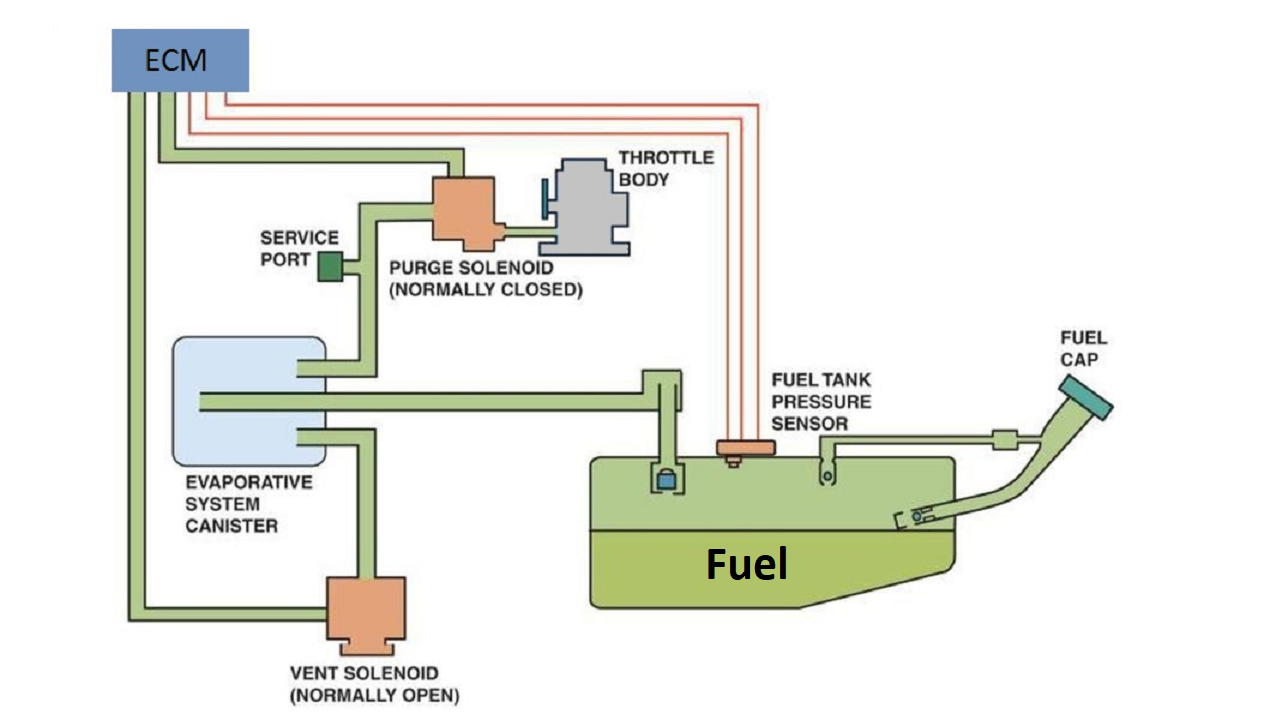
The "EVAP System" (Evaporative Emission Control System) is a vital component of a vehicle's emissions control system. Its primary function is to prevent fuel vapors from the fuel tank from escaping into the atmosphere. Instead, these vapors are stored in a charcoal canister until they can be safely routed back into the engine and burned during combustion. The "EVAP System" helps reduce harmful hydrocarbon emissions, contributing to improved air quality.
Common issues that can trigger "EVAP System" codes include:
Loose or damaged gas cap: A loose or damaged gas cap can cause the system to detect an "EVAP System" leak, leading to the illumination of the "Check Engine" light. Ensure that the gas cap is securely tightened after refueling.
Faulty EVAP purge solenoid: The EVAP purge solenoid controls the flow of fuel vapors from the charcoal canister to the engine for combustion. If the solenoid fails or gets stuck open or closed, it can cause issues with the "EVAP System" and trigger a corresponding trouble code.
Leaking or cracked EVAP system hoses: Over time, the rubber hoses in the "EVAP System" can become brittle and develop leaks or cracks. These leaks allow fuel vapors to escape, leading to potential "EVAP System" codes.
Faulty EVAP canister: The charcoal canister is an essential part of the "EVAP System" that stores fuel vapors. If the canister becomes saturated or damaged, it can impact the system's effectiveness, leading to "EVAP System" codes.
Clogged or blocked EVAP system lines: Debris, dirt, or ice can obstruct the EVAP system lines, preventing the proper flow of fuel vapors and triggering "EVAP System" codes.
When a specific "EVAP System" code is triggered, it's essential to perform a visual inspection of the gas cap, hoses, and associated components to check for obvious issues. Ensure the gas cap is tightly sealed, and inspect the hoses for signs of damage or leaks. If no visible issues are found, additional diagnostic procedures, such as a smoke test, may be necessary to identify the precise location of the leak. Smoke testing involves introducing smoke into the EVAP system to identify any leaks visually.
Diagnosing and repairing "EVAP System" codes can be challenging, as the leaks may be small and challenging to detect. If you're unsure about the diagnosis or need assistance, consult a qualified mechanic who has experience in diagnosing and repairing "EVAP System" issues.