P0136 Toyota Code - Oxygen Sensor Circuit Malfunction Bank 1 Sensor 2
Quick Answer
In order to obtain a high purification rate of the Carbon Monoxide (CO), Hydrocarbon (HC), and Nitrogen Oxide (NOx) components in the exhaust gas, a Three-Way Catalytic Converter (TWC) is used. Common causes include Faulty Oxygen Sensor Bank 1 Sensor 2, Oxygen Sensor Bank 1 Sensor 2 harness is open or shorted, Oxygen Sensor Bank 1 Sensor 2 circuit poor electrical connection. Severity is Moderate - service should be scheduled soon. The vehicle may still be drivable for short trips if it runs normally, but avoid hard driving and repair it soon.
- What it means
- P0136 Toyota indicates Oxygen Sensor Circuit Malfunction Bank 1 Sensor 2.
- Common causes
- Common causes include Faulty Oxygen Sensor Bank 1 Sensor 2, Oxygen Sensor Bank 1 Sensor 2 harness is open or shorted, Oxygen Sensor Bank 1 Sensor 2 circuit poor electrical connection.
- Severity
- Moderate - service should be scheduled soon.
- Can I drive?
- The vehicle may still be drivable for short trips if it runs normally, but avoid hard driving and repair it soon.


Code P0136 Toyota Description
The heated oxygen sensor is located behind the TWC and detects the oxygen concentration in the exhaust gas. Since the sensor is integrated with the heater that heats the sensing portion, it is possible to detect the oxygen concentration even when the intake air volume is low (the exhaust gas temperature is low).
When the air-fuel ratio becomes lean, the oxygen concentration in the exhaust gas is high. The heated oxygen sensor informs the ECM that the post-TWC air-fuel ratio is lean (low voltage, i.e. less than 0.45 V).
Conversely, when the air-fuel ratio is richer than the stoichiometric air-fuel level, the oxygen concentration in the exhaust gas is low. The heated oxygen sensor informs the ECM that the post-TWC air-fuel ratio is rich (high voltage, i.e. more than 0.45 V). The heated oxygen sensor has the property of changing its output voltage drastically when the air-fuel ratio is close to the stoichiometric level.
The ECM uses the supplementary information from the heated oxygen sensor to determine whether the air-fuel ratio after the TWC is rich or lean and adjusts the fuel injection duration accordingly. Thus, if the heated oxygen sensor is working improperly due to internal malfunctions, the ECM is unable to compensate for deviations in the primary air-fuel ratio control.
The impedance cannot be measured using an ohmmeter. Diagnostic Trouble Code (DTC) P0136 indicates the deterioration of the heated oxygen sensor. The ECM stores the DTC by calculating the impedance of the sensor when the typical enabling conditions are satisfied.

What are the Possible Causes of the DTC P0136 Toyota?
- Faulty Oxygen Sensor Bank 1 Sensor 2
- Oxygen Sensor Bank 1 Sensor 2 harness is open or shorted
- Oxygen Sensor Bank 1 Sensor 2 circuit poor electrical connection
- Gas leak from exhaust system
How to Fix the DTC P0136 Toyota?
Review the 'Possible Causes' above and visually examine the corresponding wiring harness and connectors. Check for damaged components and inspect connector pins for signs of being broken, bent, pushed out, or corroded.
Code Tech Notes
User Submitted Video
What is the Cost to Diagnose the Code?
Labor: 1.0
To diagnose the P0136 Toyota code, it typically requires 1.0 hour of labor. Rates vary by location, vehicle, and shop. Many shops charge between $80–$150 per hour; dealerships and metro areas may be higher, independents may be lower.
Need more information about the P0136 Toyota code?
Need more information on how to fix the P0136 Toyota code? Get Access to Factory Service Manuals
Need Help with the Code?
Get the P0136 Toyota code diagnosed by a professional: Find a repair shop in your area
Information for Specific Toyota Models
- P0136 1997 Toyota Camry — Heated Oxygen Sensor Circuit Malfunction Bank 1 Sensor 2
- P0136 1998 Toyota Camry — Heated Oxygen Sensor Circuit Malfunction Bank 1 Sensor 2
- P0136 1999 Toyota Camry — Heated Oxygen Sensor Circuit Malfunction Bank 1 Sensor 2
- P0136 2000 Toyota Camry — Heated Oxygen Sensor Circuit Malfunction Bank 1 Sensor 2
- P0136 2001 Toyota Camry — Heated Oxygen Sensor Circuit Malfunction Bank 1 Sensor 2
- P0136 2006 Toyota Camry — Oxygen Sensor Circuit Malfunction Bank 1 Sensor 2
- P0136 2007 Toyota Camry — Oxygen Sensor Circuit Malfunction Bank 1 Sensor 2
- P0136 2008 Toyota Camry — Oxygen Sensor Circuit Malfunction Bank 1 Sensor 2
- P0136 2009 Toyota Camry — Oxygen Sensor Circuit Malfunction Bank 1 Sensor 2
- P0136 2010 Toyota Camry — Oxygen Sensor Circuit Malfunction Bank 1 Sensor 2
- P0136 2011 Toyota Camry — Oxygen Sensor Circuit Malfunction Bank 1 Sensor 2
- P0136 2001 Toyota Corolla — HO2S12 Circuit Malfunction 3ZZ-FE Engine
- P0136 2002 Toyota Corolla — HO2S12 Circuit Malfunction 3ZZ-FE Engine
- P0136 2003 Toyota Corolla — HO2S12 Circuit Malfunction 3ZZ-FE Engine
- P0136 2004 Toyota Corolla — HO2S12 Circuit Malfunction 3ZZ-FE Engine
- P0136 2005 Toyota Corolla — HO2S12 Circuit Malfunction 3ZZ-FE Engine
- P0136 2006 Toyota Corolla — HO2S12 Circuit Malfunction 3ZZ-FE Engine
- P0136 2000 Toyota Echo — Oxygen Sensor Circuit Malfunction Bank 1 Sensor 2
- P0136 2001 Toyota Echo — Oxygen Sensor Circuit Malfunction Bank 1 Sensor 2
- P0136 2002 Toyota Echo — Oxygen Sensor Circuit Malfunction Bank 1 Sensor 2
- P0136 2001 Toyota Highlander — Oxygen Sensor Circuit Malfunction Bank 1 Sensor 2
- P0136 2002 Toyota Highlander — Oxygen Sensor Circuit Malfunction Bank 1 Sensor 2
- P0136 2003 Toyota Highlander — Oxygen Sensor Circuit Malfunction Bank 1 Sensor 2
- P0136 2004 Toyota Highlander — Oxygen Sensor Circuit Malfunction Bank 1 Sensor 2
- P0136 2005 Toyota Highlander — Oxygen Sensor Circuit Malfunction Bank 1 Sensor 2
- P0136 2006 Toyota Highlander — Oxygen Sensor Circuit Malfunction Bank 1 Sensor 2
- P0136 2007 Toyota Highlander — Oxygen Sensor Circuit Malfunction Bank 1 Sensor 2
- P0136 2004 Toyota Prius — HO2S12 Circuit Malfunction
- P0136 2005 Toyota Prius — HO2S12 Circuit Malfunction
- P0136 2006 Toyota Prius — HO2S12 Circuit Malfunction
- P0136 2007 Toyota Prius — HO2S12 Circuit Malfunction
- P0136 2008 Toyota Prius — HO2S12 Circuit Malfunction
- P0136 2009 Toyota Prius — HO2S12 Circuit Malfunction
- P0136 2013 Toyota RAV4 — Oxygen Sensor Circuit Malfunction Bank 1 Sensor 2
- P0136 2014 Toyota RAV4 — Oxygen Sensor Circuit Malfunction Bank 1 Sensor 2
- P0136 2015 Toyota RAV4 — Oxygen Sensor Circuit Malfunction Bank 1 Sensor 2
- P0136 2016 Toyota RAV4 — Oxygen Sensor Circuit Malfunction Bank 1 Sensor 2
- P0136 2017 Toyota RAV4 — Oxygen Sensor Circuit Malfunction Bank 1 Sensor 2
- P0136 2018 Toyota RAV4 — Oxygen Sensor Circuit Malfunction Bank 1 Sensor 2
- P0136 Toyota RAV4 — HO2S12 Circuit Malfunction
Frequently Asked Questions about P0136 Toyota Code
1. What are the common symptoms of OBDII code P0136 in a Toyota?
The common symptoms of code P0136 include decreased fuel efficiency, rough idling, poor engine performance, and the illumination of the check engine light.
2. What does the OBDII code P0136 for a Toyota indicate?
Code P0136 indicates a malfunction in the oxygen sensor circuit for Bank 1 Sensor 2 in the Toyota's exhaust system.
3. What are the possible causes of OBDII code P0136 in a Toyota?
Possible causes of code P0136 in a Toyota include a faulty oxygen sensor, damaged wiring or connectors, exhaust leaks, or issues with the engine's computer system.
4. How can I diagnose the OBDII code P0136 in my Toyota?
To diagnose code P0136, you can use an OBDII scanner to read the code, visually inspect the oxygen sensor and its wiring, check for exhaust leaks, and perform a voltage test on the sensor.
5. Can I still drive my Toyota with OBDII code P0136?
While it is possible to drive your Toyota with code P0136, it is not recommended as it can lead to decreased fuel efficiency and potential damage to the catalytic converter over time.
6. How can I repair OBDII code P0136 in my Toyota?
Repairing code P0136 may involve replacing the oxygen sensor for Bank 1 Sensor 2, repairing damaged wiring or connectors, fixing exhaust leaks, or resetting the engine's computer system.
7. Is it possible to reset the check engine light after fixing OBDII code P0136 in a Toyota?
Yes, you can reset the check engine light using an OBDII scanner after fixing the issue causing code P0136 in your Toyota.
8. Are there any DIY tips for troubleshooting OBDII code P0136 in a Toyota?
DIY tips for troubleshooting code P0136 include checking for visible damage to the oxygen sensor wiring, ensuring proper connection of the sensor, and inspecting the exhaust system for leaks.
9. Can a dirty or clogged air filter cause OBDII code P0136 in a Toyota?
While a dirty or clogged air filter may affect engine performance, it is not a direct cause of code P0136. Focus on checking the oxygen sensor and related components for this particular code.
10. How important is it to address OBDII code P0136 promptly in a Toyota?
It is important to address code P0136 promptly in a Toyota to ensure optimal engine performance, fuel efficiency, and to prevent potential damage to the catalytic converter and other components in the long run.
Discuss the causes and fixes for P0136 Toyota OBDII Code
-
Where is the bank 1 sensor 2 located, exactly? I have a 2002 Highlander and there are 3 sensors.
-
What engine size is your Highlander? Here is the image for the 6 Cylinder engine.
-
Does anyone Know what color wires from my 1999 Tacoma harness go into the O2 sensor? I had to splice wires onto my harness to reach O2 sensor. O2 sensor wires are 2 black, 1 blue and 1 white. The colors on my wire harness are 1 black, 1 brown, white/red, and red/white. Thanks!
-
What is the engine size of your Tacoma? ans is for the Rear O2 Sensor correct?
-
Here is the only image of the harness I got. Let me know if you need anything else.
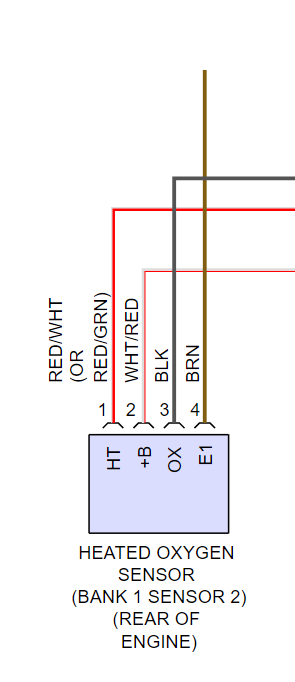
Click here to enlarge image -
+B = Battery Voltage Positive
E1 = Oxygen Sensor Negative Signal
OX = Oxygen Sensor Positive Signal
HT = Oxygen Sensor Heater Control -
You are awesome! Thanks...that helps! Let me try that and see if that’s all I need.... This has been very “trying” lol

Fix Your Car Smarter
Try the New AutoCodes App!
Get complete OBDII diagnostics, repair solutions, and cost estimates, plus AI chat support on demand.
